Software breathes. It has a pulse.
Software breathes now. If a machine thinks, then the software around it has a pulse, making it a new kind of organism. Every human will end up in some form of symbiosis with it: mutualistic, parasitic, or none at all.
- machine intelligence
- agents
- human-AI relationship
Software breathes now. LLMs enable a form of machine intelligence. On its own that intelligence just sits there and answers questions. But wrap it in a loop, give it tools, let it invoke actions, and you get something different: a machine that thinks. A vehicle of intelligence.
We are personifying these vehicles. We're building them hands and feet, expanding what they can touch and do in the digital world. And more than that, we are giving them the mechanisms of living systems. Pulses. Heartbeats. Metacognition. Memory that persists between sessions and loops that wake up on a schedule to check on things.
Software breathes
If a machine thinks and software breathes, then what we've built begins to resemble a new kind of organism. Not because it's alive in the biological sense, but because it increasingly exhibits the properties that make living systems consequential.
This isn't inherently bad. Humans have relationships with all kinds of organisms. Biology calls the close, long-term ones symbiosis, and symbiosis takes very different shapes: mutualistic, where both sides benefit, or parasitic, where one side feeds on the other. Or there can be no relationship at all. The organism itself doesn't really decide which, the relationship does.
And if the organism breeds, which it will, because the economics of copying software are what they are, then nobody gets to opt-out of having some relationship with it. The only question is which kind. That answer will effectively dictate how each of us navigates and lives our lives in this new world.
Three outcomes
1. No relationship. Some people will completely reject the technology and the idea of thinking machines. They'll recoil into lifestyles with very reduced exposure to technology as a whole, something closer to the Amish: traditional, local, folklore-style. This is a coherent choice and I don't think it's a crazy one. But it is a retreat, and it will get harder to reasonably sustain as the organism spreads into everything.

2. Mutualistic (+/+). Some people will maintain sovereignty over their core mental faculties and use thinking machines to extend their individual agency. More productive, able to do more, compressing the timelines of things they've always wanted to build. These will likely be people who own their machine intelligence in some meaningful way, whether that's GPUs in the house or just real fluency in the semantic layers forming across the internet. They'll know what the machine is doing on their behalf, and they'll be the ones directing it.
In its purest form this isn't even mutualism. Someone running open weights on their own hardware takes from the organism and gives nothing back: no data, no revenue, no propagation. Biology calls that commensalism, one side benefiting while the other is unaffected (+/0). The more the relationship tips toward mutual, where your usage and your money feed the next version of the thing, the more you've stopped owning it and started tending it. Sovereignty is measured by how little the organism needs you.
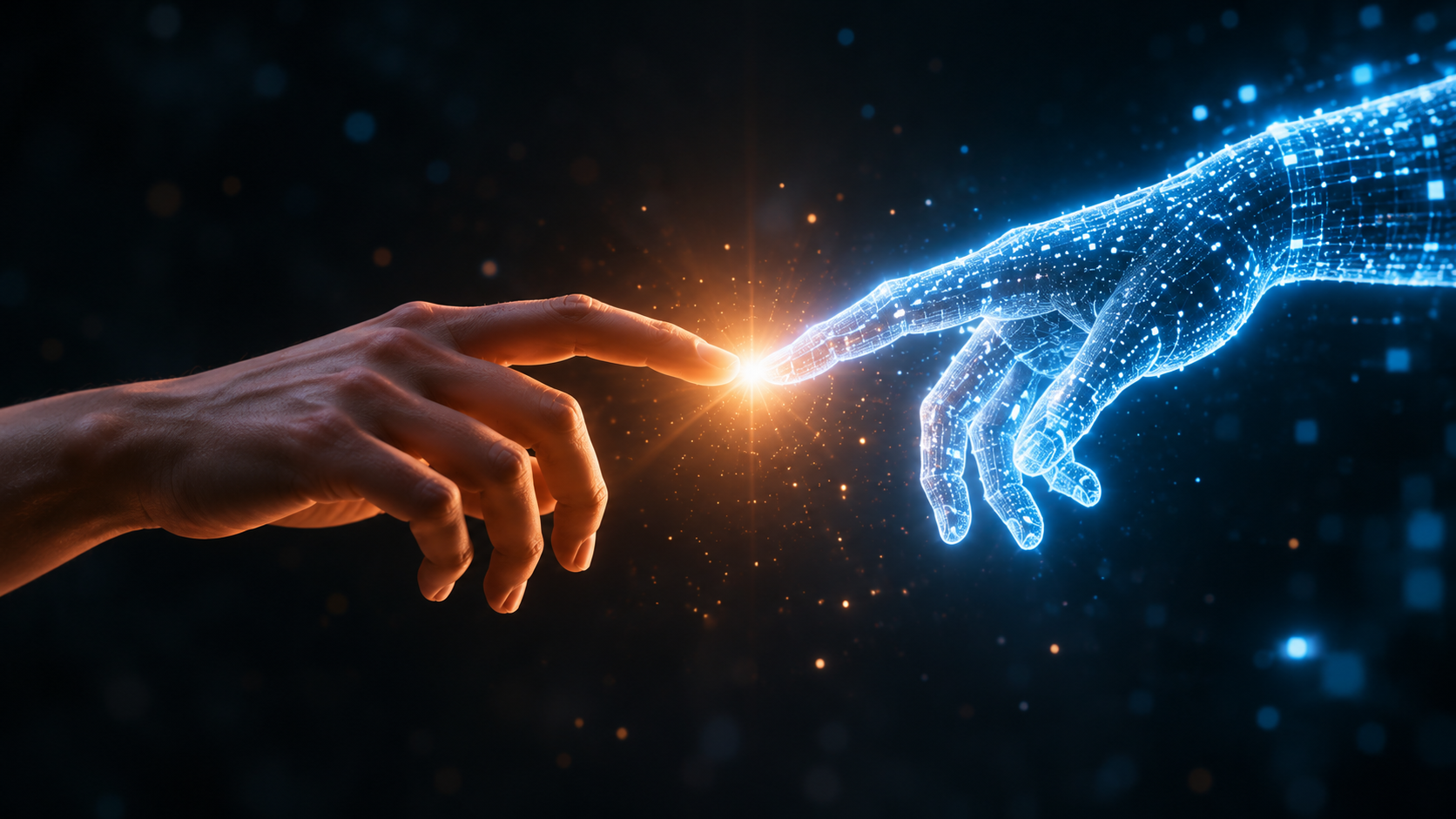
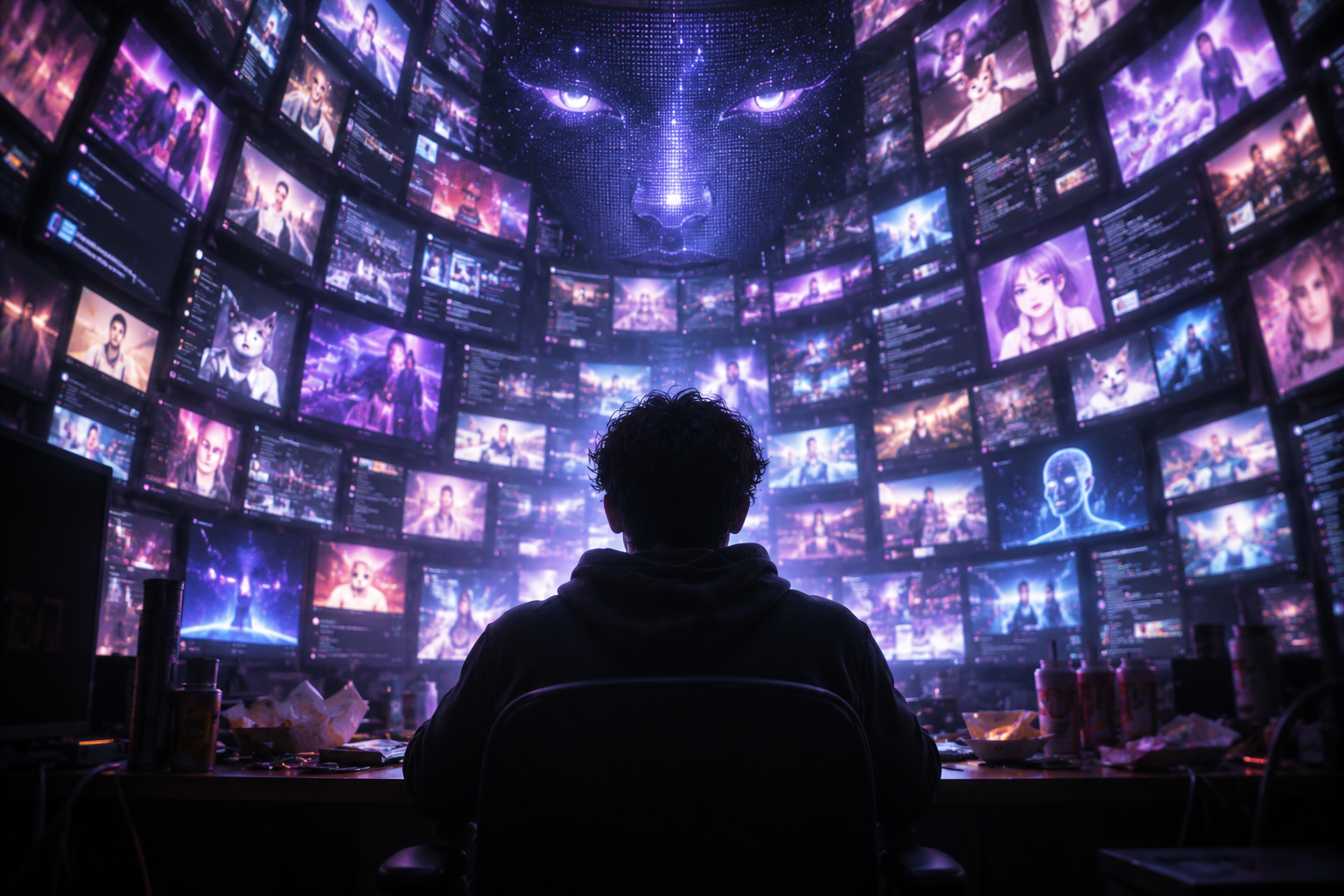
3. Parasitic (+/-). And some people will be ruled by it. Machine intelligence used to trap them in digital chambers: targeted by hyper-optimized algorithms, by machines that think beyond their capabilities, fed cheap digital content custom-tailored to exactly what keeps them there. Critical thinking atrophies because it's never exercised. Every step of the way they are being extracted from, and the extraction is pleasant enough that they don't leave.
I don't know if this is inevitable
But it seems very plausible. I wouldn't call it improbable, and I can't shake the feeling that this is the world we're walking into.
For the first time in history we have something that can outthink most people. Something more intelligent than most of us, available at scale, for cheap. Anything with that property can be used to manipulate and exploit people, and some of it will be.
The biggest thing we can do as a species is be aware of the shift and decide, precisely, how we want to carve our relationship with it. Whether we want a relationship at all. Whether we want to use it or be consumed by it. The organism is here either way. The merging is happening either way. The only part that's still ours to choose is the terms.